
Chapter 1 — Japan
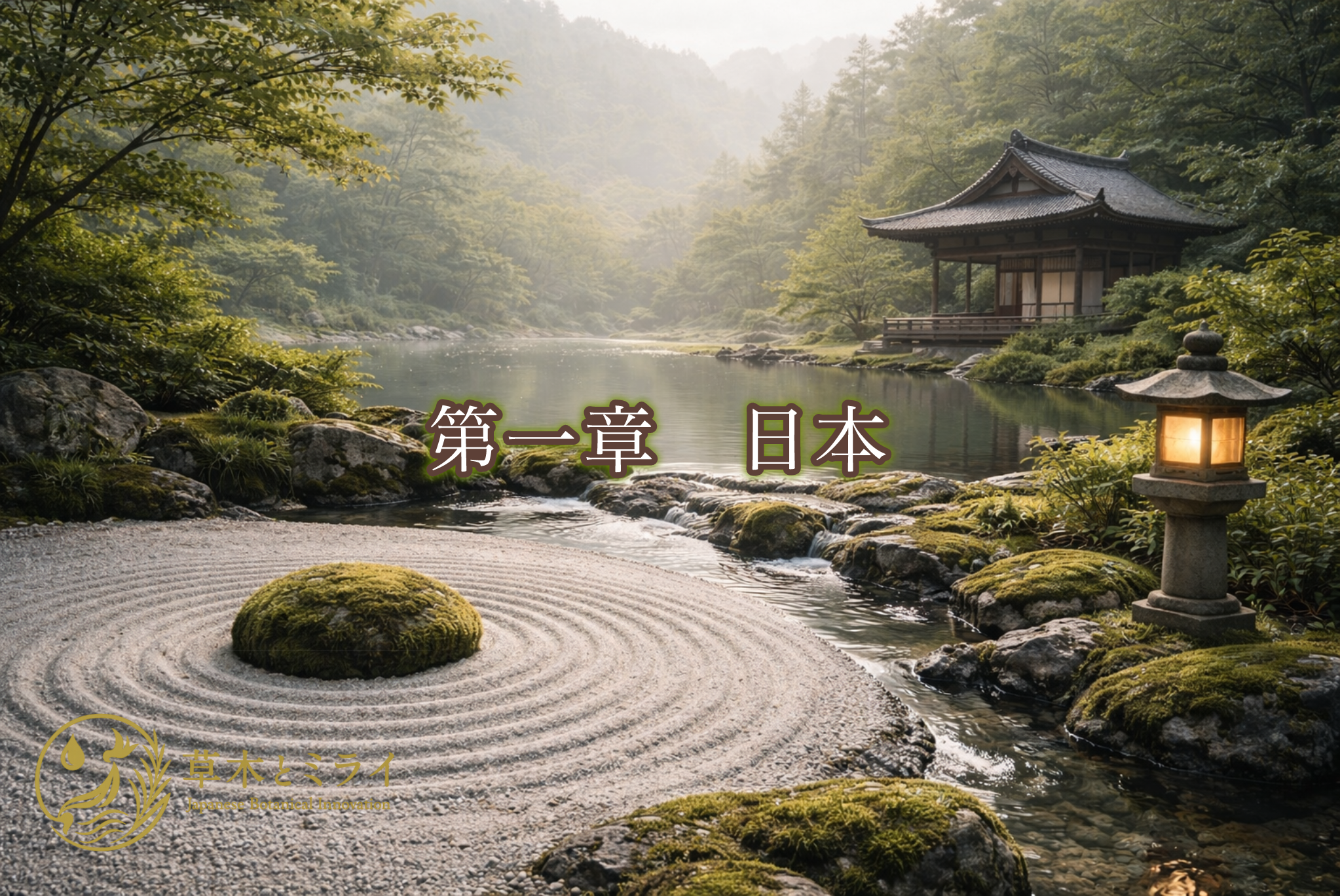
日本には、整えるという思想がある。
世界は、治してきた。
不調をなくし、症状を消し、
原因を叩く。
それは強い。
合理的だ。
否定はしない。
だが、日本は違う。
治すのではなく、
整える。
春が来る。
夏が巡る。
秋が満ちる。
冬が静まる。
どれも消さない。
どれも否定しない。
巡りの中で、均衡を保つ。
それが、中庸。
身体も同じだ。
疲れもある。
冷えもある。
高ぶりもある。
それらを敵にしない。
ただ、整える。
整えるとは、
抑え込むことではない。
誤魔化すことでもない。
戦うことでもない。
巡りを戻すこと。
草木とミライが
「乱れを、整える。」と言うとき、
それは効能ではない。
思想だ。
日本発のボタニカルとは、
和柄でもない。
抹茶色でもない。
神社の気配でもない。
自然を敵にしない身体観。
それを、現代に翻訳すること。
整うとき、
人は静かになる。
静けさは、
やがて、美しさになる。
Chapter 1 — Japan
In Japan, there is a philosophy of restoring balance.
The world has long moved toward curing.
Eliminate discomfort.
Erase symptoms.
Attack the cause.
It is strong.
It is rational.
We do not deny it.
But Japan holds another way.
⸻
Not to cure,
but to restore balance.
⸻
Spring arrives.
Summer circulates.
Autumn ripens.
Winter settles into stillness.
None is erased.
None is rejected.
Within the cycle, equilibrium is kept.
This is the sense of Chūyō — the way of the middle.
⸻
The body is the same.
There is fatigue.
There is coldness.
There is agitation.
They are not enemies.
They are simply to be restored.
⸻
To restore balance is not
to suppress,
to disguise,
or to fight.
It is to return circulation.
⸻
When Kusaki to Mirai says
“Restore what is disturbed,”
we are not speaking of efficacy.
We are speaking of philosophy.
⸻
Japanese botanical does not mean
patterns,
matcha tones,
or the atmosphere of shrines.
It means a view of the body that does not treat nature as an enemy.
To translate that view into the present.
⸻
When balance returns,
a person grows quiet.
And in that quiet,
beauty emerges.